Ensure healthy lives and promote well-being for all at all ages.
Through health-care services, mental health supports, research, community engagement, advocacy and education, Wilfrid Laurier University demonstrates our commitment to improving health and well-being and contributing to the achievement of this critical SDG.
The work that Laurier completed in 2025 to advance SDG 3.
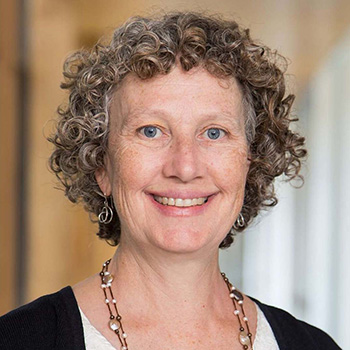
Following a successful first term as a tier two Canada Research Chair, Bree Akesson’s position has been renewed for an additional five-year term. Akesson, a professor of Social Work at Wilfrid Laurier University, is the Canada Research Chair in Global Adversity and Well-Being.
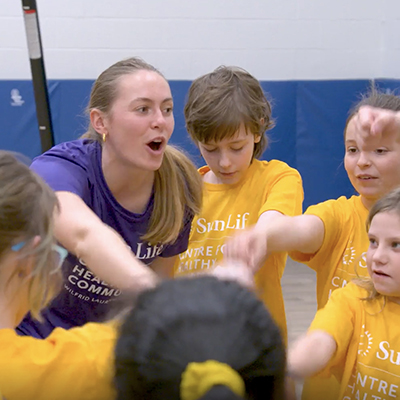
The Sun Life Centre for Healthy Communities at Wilfrid Laurier University is giving local children a new opportunity to learn and play with the launch of Toyota STEM and Sport, a free evening program that combines physical activity with hands-on science, technology, engineering and math (STEM) learning.
Following a successful debut in Waterloo earlier this year, the Brantford program kicks off Oct. 21 at Russell Reid Public School and invites local children ages 9 to 12 to explore STEM concepts through sport-based games and activities. From measuring heart rates with Fitbits to learning coding through football drills, participants will discover how science and sports intersect in fun, engaging ways that get them moving while they learn.
As part of a first-of-its kind needs assessment for intersexualized adults in Canada, Wilfrid Laurier University Professor Morgan Holmes interviewed eight individuals about their lives and experiences with the medical system.
“What I heard over and over again was that intersex people are not dismayed about being different; they feel hurt that adults thought they were unlovable,” says Holmes, a professor of Anthropology. “That’s the harm. All of this machination to create cosmetically pleasing bodies and ‘normal’ sexualities teaches kids – and later adults – that they are not viable as human beings. That’s a big burden for people to carry to make their parents happy about what they look like.”
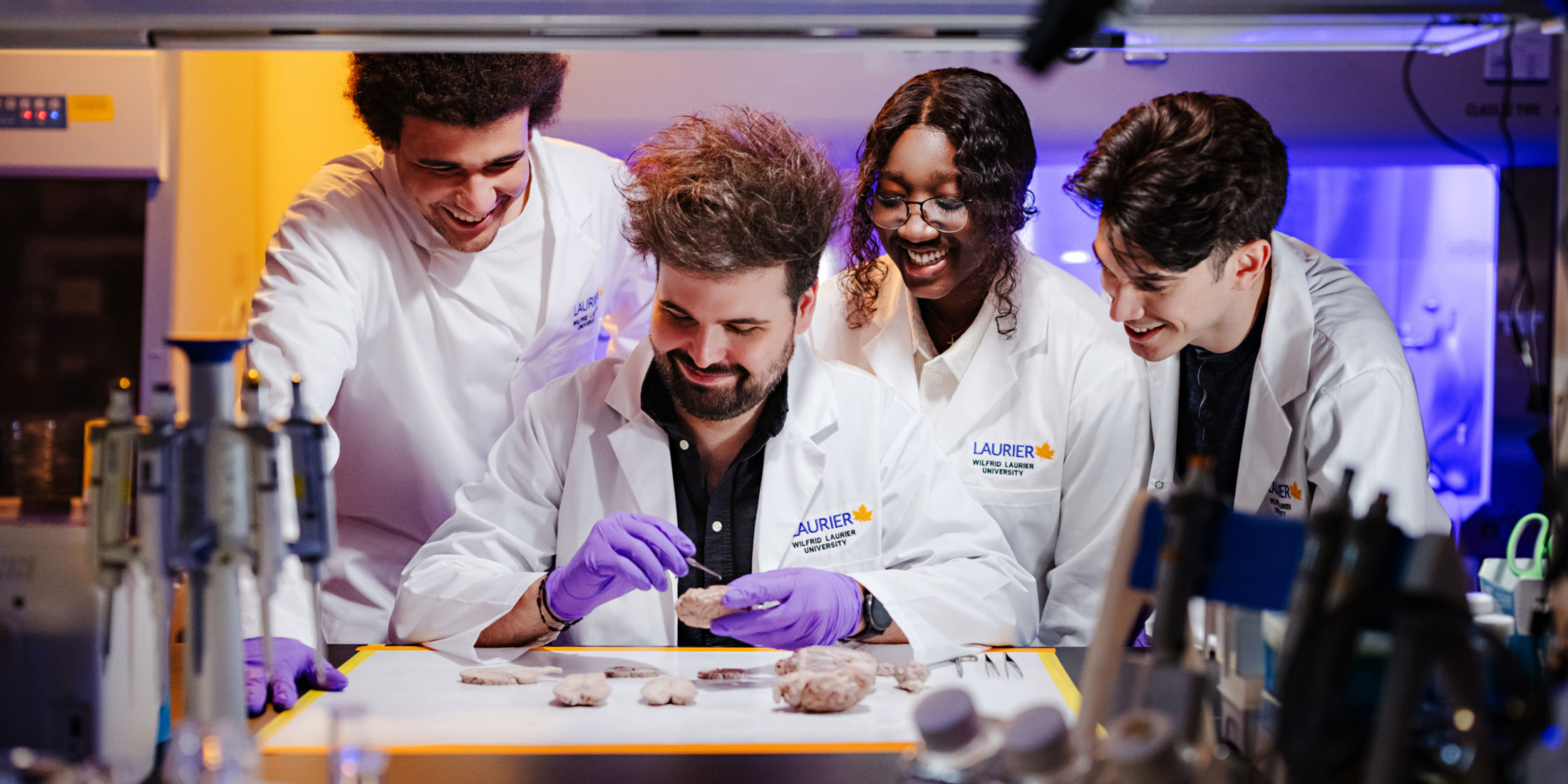
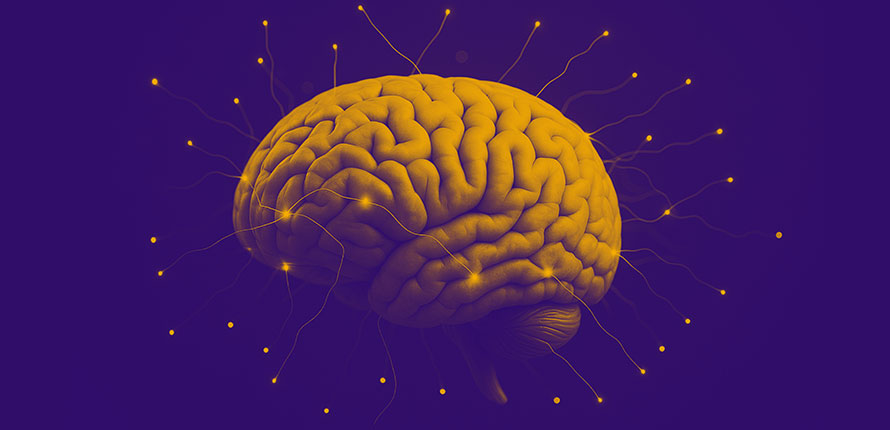
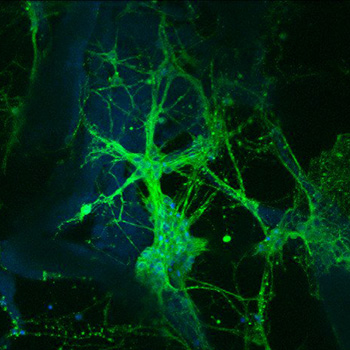
The human brain is a natural marvel. It is the origin of innovation and ingenuity, emotion and experience. The brain is also an enigma. A dense network of cells with trillions of connections, it controls all systems in the body through the central nervous system. Whether throwing a ball, feeling disappointment, remembering your wedding or taking a breath, the brain plays a central role in every facet of human life. Its interconnectedness intrigues and perplexes researchers, leaving much to uncover after centuries of scientific inquiry. In disciplines ranging from behavioural neuroscience to music therapy, Wilfrid Laurier University researchers are building our collective understanding of the human body’s most complex organ.
Jennifer Williams, an assistant professor of Kinesiology and Physical Education at Wilfrid Laurier University, has received a 2025 Ontario Brain Institute - Banting Discovery Award. She is one of 10 Canadian scientists to win the $30,000 prize. The Banting Discovery Foundation provides Canada’s most talented and innovative health and biomedical scientists with seed money in the first three years of their university appointments to help launch their independent research programs.
Laurier research centres advancing SDG 3.
The Centre for Community Research, Learning and Action (CCRLA) is an interdisciplinary research centre located in Laurier’s Faculty of Science. The centre's work is focused on developing community partnerships and producing research, learning and action that advances community well-being and social justice. CCRLA facilitates community-based research by brokering linkages between community partners and Laurier student and faculty researchers. CCRLA provides an activity centre for social policy development and community action. The defining feature of the centre is its commitment to collaborative processes between university, community, industry and policy partners that honour the unique wisdom and skills of the non-academic community.
The Manulife Centre for Community Health Research is an interdisciplinary community development and research centre guided by multiple social determinants of health. The centre acts as an incubator for students committed to community-based scholarship and development in the field of health and well-being. The centre welcomes master’s and PhD students, as well as postdoctoral fellows, from a variety of academic disciplines to work within any of its communities of practice. Research priorities include women and gender, global health and development, Francophone issues, Indigenous health and wellness, environmental issues, community economic development and social innovation.
The Manfred and Penny Conrad Institute for Music Therapy Research is a dynamic forum that bridges the divide between clinical practice and research. The institute’s mission is to provide opportunities for concrete research collaboration and discussions. It aims to bring together the broad range of clinical research activities that already take place at Laurier and foster and house the new research endeavours that will undoubtedly grow from the activities of the faculty and graduate students, particularly with the establishment of Laurier's Master of Music Therapy program.
Laurier initiatives in 2024 that advanced SDG 3.
Laurier works closely with local, national and global health institutions to improve health and well-being outcomes. Examples of current collaborative work include:
The Manulife Centre for Community Health Research (MCCHR) is an interdisciplinary community development and research centre guided by multiple social determinants of health. MCCHR acts as a bridge between the university and the larger community in order to enhance innovation and creative working partnerships with individuals, social welfare, public, non-profit and for-profit entities. An excellent example of a mutually beneficial university and community collaboration can be found between the Sexual Assault Support Centre (SASC) of Waterloo Region and MCCHR. Members of the MCCHR research team worked with SASC to draft a sexual assault protocol for the region of Waterloo.
The Interdisciplinary and Indigenous Pathways to Wellness Research Group (IIPWRG) partners on applied health research projects when requested by communities, organizations and governments. IIPWRG is committed to collaborative and partnered approaches to developing, conducting and sharing knowledge from research. It works on a national scale and recognizes that the health and wellness of people, families, communities and nations are often tied to non-health systems such as education, child welfare, justice, environment, local governance and spirituality. As such, the work often involves working with diverse and interdisciplinary rights holders and stakeholders to address issues that will lead to improved health and wellness, as defined by those who the research is intended to benefit. Current projects include:
It is well-established that adversity can impact multiple dimensions of well-being. However, most research on adversity focuses on individual rather than family systems. Furthermore, the family and home are rarely considered in such analyses. The Global Adversity and Well-Being Research Group examines intersections of extreme adversity, including poverty, war and climate change, and well-being through the lens of place theory, with a specific focus on the family and home. This research builds upon previous work with war-affected families by using participatory mixed methods, sharing research results with academic communities, practitioners/policymakers and lay audiences, and training a new cohort of student-researchers. The research group works with international health and well-being organizations include The Hope Foundation for Women and Children, UNICEF and Terre des Hommes.
Laurier is committed to improving and promoting health and well-being within our diverse local communities. Our programs include:
Laurier’s Waterloo campus is home to the Athletic Complex, University Stadium and Ansley Alumni Field. Its facilities include gymnasiums, a pool, fitness centre, climbing wall, squash courts and dance/aerobics studios, and soccer and football fields. Many facilities are available for rent and group bookings to Laurier students, staff and community organizations. The Athletic Complex, Alumni Field, and University Stadium athletic and meeting facilities are available for public use through the university’s facility bookings process. The university offers a number of free and paid programs for youth and children including sports camps, the Sun Life Financial Centre for Physically Active Communities and Brainworx.
Laurier’s Brantford campus is home to the Laurier Brantford YMCA, which provides health, fitness, social and recreation needs for students, staff, faculty and the Brantford community. This is a shared facility with the community of Brantford and includes a fitness centre, pool and gymnasium.
Laurier uses a circle of care model that incorporates specialties from a diverse, multidisciplinary team. Students have free access to the Student Wellness Centre which offers a number of wellness professionals to enhance their health and well-being, including sexual and reproductive health services free of charge. These include:
Laurier is committed to fostering a supportive, thriving environment for all of our staff and students. Laurier offers workshops and programming to promote and support good mental health. This includes Thrive Week, a week-long series of free events run twice a year to build positive mental health on campus.
Mental health services are available for free to students through the Student Wellness Centre, including consultations with the mental health nurse and medical appointments with doctors for diagnosis, treatment or referral of mental health concerns. Laurier also offers appointments with counsellors and psychotherapists for short-term, goal-directed therapy, crisis intervention and crisis management to all students.
As part of Laurier’s employee benefit program, all staff and faculty can access mental health support through Kii by CloudMD, Laurier’s Employee and Family Assistance Program (EFAP). It offers confidential, professional counseling services for faculty, staff and their dependents. The EFAP is free, voluntary and provides high-quality services.
Discover how Laurier is contributing to United Nations Sustainable Development Goal targets.