


We use cookies on this site to enhance your experience.
By selecting “Accept” and continuing to use this website, you consent to the use of cookies.
May 13, 2026
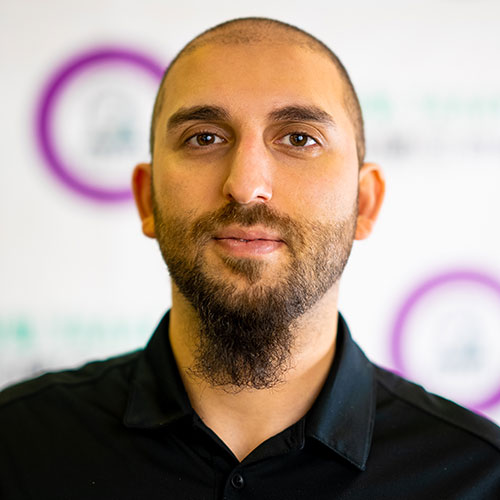
Print | PDFArdavan Eizadirad, an associate professor in the Faculty of Education at Wilfrid Laurier University, has been appointed the Canada Research Chair in Innovation and Inclusion in Education for Thriving School-Community Ecosystems. The Canada Research Chairs (CRC) Program invests in retaining some of the world’s most accomplished minds. Eizadirad’s Tier 2 CRC position includes research funding for a five-year term, including support for Laurier student researchers. Laurier is currently home to 12 CRCs.
As the CRC in Innovation and Inclusion in Education for Thriving School-Community Ecosystems, Eizadirad plans to foster partnerships with academics, practitioners, policymakers and community organizations to address systemic inequities in education. Together, they will develop community-based, trauma-informed, culturally responsive interventions and AI-based tools to inform equitable educational policies and practices.
Eizadirad’s work centres on practical impact via collaboration with school boards, Ontario’s Ministry of Education and community organizations, including the non-profit Youth Association for Academics, Athletics, and Character Education (YAAACE) in Toronto’s Jane and Finch community. He addresses a wide range of subjects through his research – from anti-Asian racism in Canada to mental health programs for Black youth – and has authored more than 60 peer-reviewed publications and seven co-edited books. Eizadirad’s latest book, co-authored with Sabreena Ghaffar-Siddiqui, is titled DEI Undone: The Rise, Fall, and Rebirth of Diversity, Equity, and Inclusion.
Below, Eizadirad reflects on his research priorities as CRC in Innovation and Inclusion in Education for Thriving School-Community Ecosystems.
How does it feel to be appointed as a Canada Research Chair?
It’s humbling, exciting and deeply affirming. The CRC feels less like an individual milestone and more like recognition of the communities, students, colleagues and partners I’ve learned from and had the blessing to work alongside over the years.
What are the key systemic inequities you plan to address through your research?
At the core, I’m focused on inequities that continue to reproduce unequal outcomes in education, particularly for racialized, low-income and historically equity-denied communities. This includes gaps in teacher diversity where students often don’t see themselves reflected in educators, as well as structural barriers tied to poverty and lack of access to culturally responsive and sustaining teaching practices.
I’m also interested in how these inequities intersect across systems, including schools, communities and policy environments, to perpetuate risk factors for engaging in violence because they’re rarely isolated. As a collective, the overarching goal of this research program is to foster thriving school-community ecosystems by bringing together fields that rarely intersect with intentionality. We will develop innovative, scalable solutions by studying factors that improve teacher representation and co-designing AI-driven tools for school and community interventions to guide policy reform.
"No meaningful change in education happens in isolation. If research is done without a multiplicity of voices and lived experiences, it risks missing the mark and being ineffective."
Collaboration seems to be a central tenet of your research. Why is that important?
No meaningful change in education happens in isolation. Schools are part of broader ecosystems with families, communities, policymakers and organizations that all influence access to opportunities and student achievement. If research is done without a multiplicity of these voices and lived experiences, it risks missing the mark and being ineffective.
Collaboration with students, parents, Elders, educators, administrators and community partners allows the work to stay grounded, relevant, relational and accountable. We can develop more sustainable, impactful solutions when we shift away from research “about” communities toward research as activism “with” communities.
How and why do you intend to incorporate AI into your research program?
AI is already shaping education, whether we engage with it critically or disengage from it due to fear or worry. My goal is to ensure it’s used intentionally, ethically and responsibly within education and public sectors. I’m interested in how AI can support culturally responsive teaching by helping educators design lessons that reflect students’ identities and lived experiences, while also reducing workload for staff.
At the same time, I’m cautious about its risks. AI can reproduce bias if left unchecked. Part of the research will involve testing, refining and evaluating AI tools with educators, colleagues and community non-profit organizations to ensure the technology actually advances equity rather than deepening existing disparities.
What impact do you hope to have as a Canada Research Chair?
I hope our research projects and findings over the next five years influence policy and – just as importantly – classroom experiences and community outcomes. If, over time, we see more diverse educators entering and staying in the profession, more culturally responsive and sustaining teaching practices, and stronger school-community relationships, that would signal progress by creating conditions where all students can genuinely thrive. It will require institutional reforms where equity isn’t an add-on, but embedded in everyday polices and practices that unite people rather than divide them across differences.