Aug. 6, 2026
Starting university often means stepping into unfamiliar territory — new routines, new expectations, and, for many Indigenous students, a campus environment that doesn’t immediately reflect their communities or cultural experiences.
The transition can be challenging, says Wilfrid Laurier University Associate Vice-President: Indigenous Initiatives Darren Thomas.
“The experience of going to university can be a real culture shock to Indigenous learners,” says Thomas. “Having a space on campus for them to be themselves, to feel the support and safety of other like-minded folks is key to their success.”
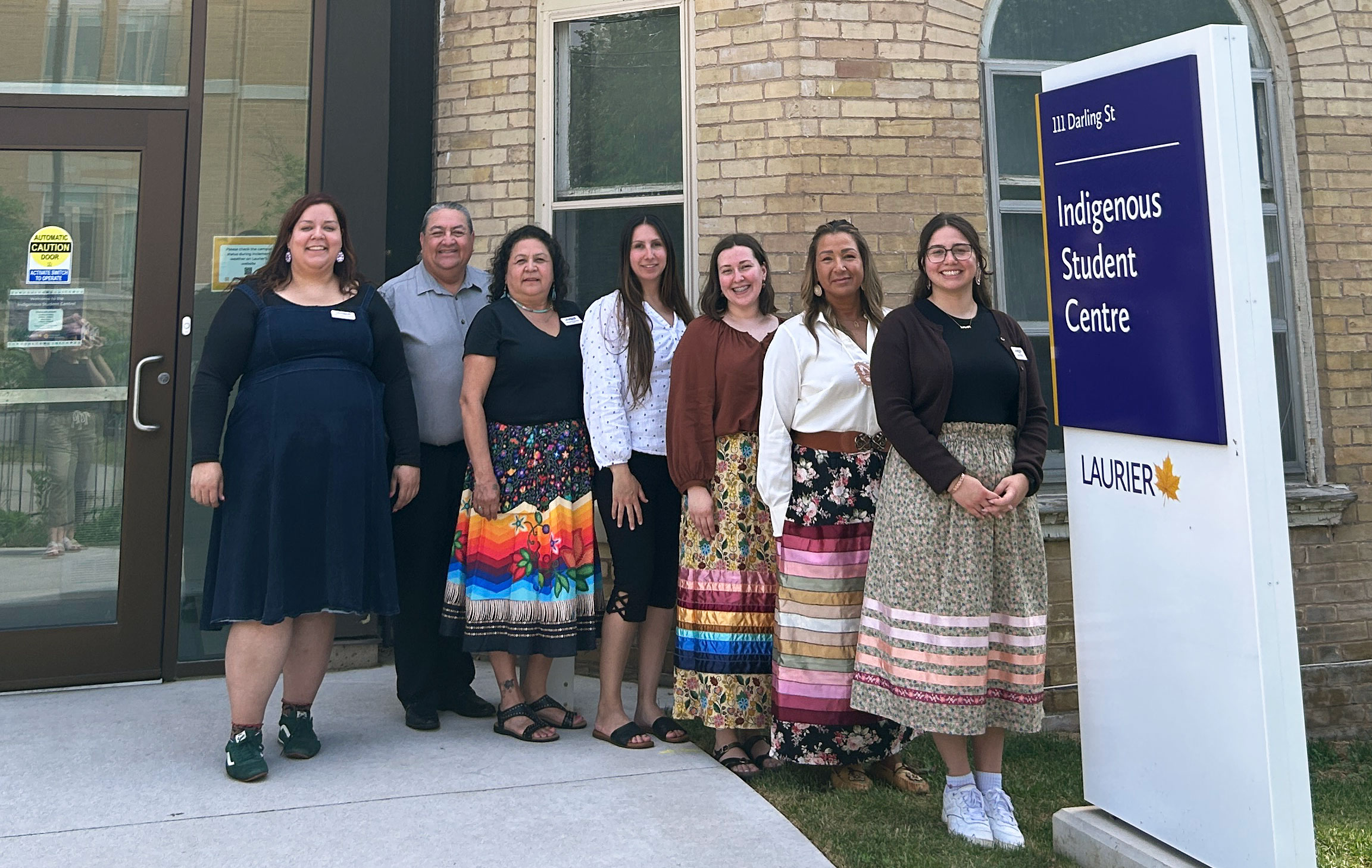
In June, staff from Laurier’s Office of Indigenous Initiatives and Indigenous Student Services (shown) hosted an open house at the Brantford campus Indigenous Student Centre. More than 70 members of campus and the broader community toured the facility and its newly redeveloped garden and outdoor ceremony space.
Indigenous Student Centres (ISCs) on Laurier’s Brantford and Waterloo campuses were created to ease that transition and offer a place where First Nation, Inuit and Métis students feel a sense of belonging from day one.
“Our Indigenous Student Centres focus on cultural, wellness and student success-based programming,” says Emily Daniel, director of Laurier’s Office of Indigenous Initiatives. “Indigenous staff are here to support Indigenous students, helping them navigate a Western institution through an Indigenous lens.”
At the Brantford campus ISC, known as Onkwehonwè:ne, Mohawk for “at the place of the original people,” Indigenous students can access counsellors and learning consultants for everything from academic to financial support. Staff advise on opportunities for internships, scholarships and awards, and administer donor-led emergency funding designed to help counter unexpected financial burdens that might prevent students from continuing their education.
Onkwehonwè:ne also facilitates access to Elders and knowledge keepers, serving as a conduit between students and the broader Indigenous community. This enables Indigenous students at Laurier to further explore their culture both on and off campus, through themed workshops ranging from baking to ceremony to crafting.
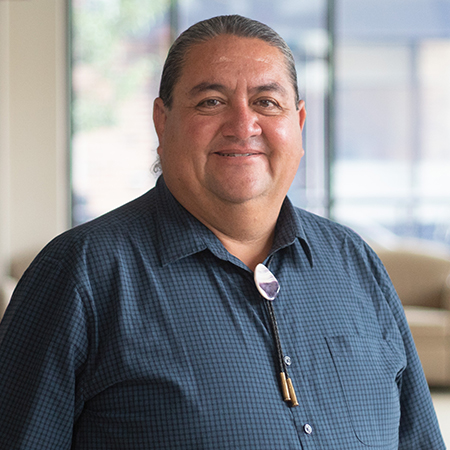
“The experience of going to university can be a real culture shock to Indigenous learners. Having a space on campus for them to be themselves, to feel the support and safety of other like-minded folks is key to their success.”
Darren Thomas, Associate Vice-President: Indigenous Initiatives
Outside of normal business hours, Indigenous students continue to have controlled access to Onkwehonwè:ne, which provides a much-needed safe space for studying, lounging or simply being.
“There’s something about having a space on campus where you’re not the only Indigenous person in the room or being put on the spot to provide the Indigenous perspective in a class discussion,” says Daniel. “Being able to sit with other folks who understand where you’re coming from and to be your authentic self creates a real sense of community.”
For Sam Lewis, a fourth-year student pursuing a double major in Criminology and Indigenous Studies, Onkwehonwè:ne has been integral in exploring her Indigeneity — an aspect of her identity that she only recently discovered in adulthood.
“Through the centre, I’ve made my first ribbon skirt, painted birch bark and learned how to drum,” says Lewis. “And as the mother of a four-year-old, I’m able to pass these new skills and experiences on to her as well.
“I wouldn’t have had any of these opportunities if the Indigenous Student Centre wasn’t here on the Brantford campus.”
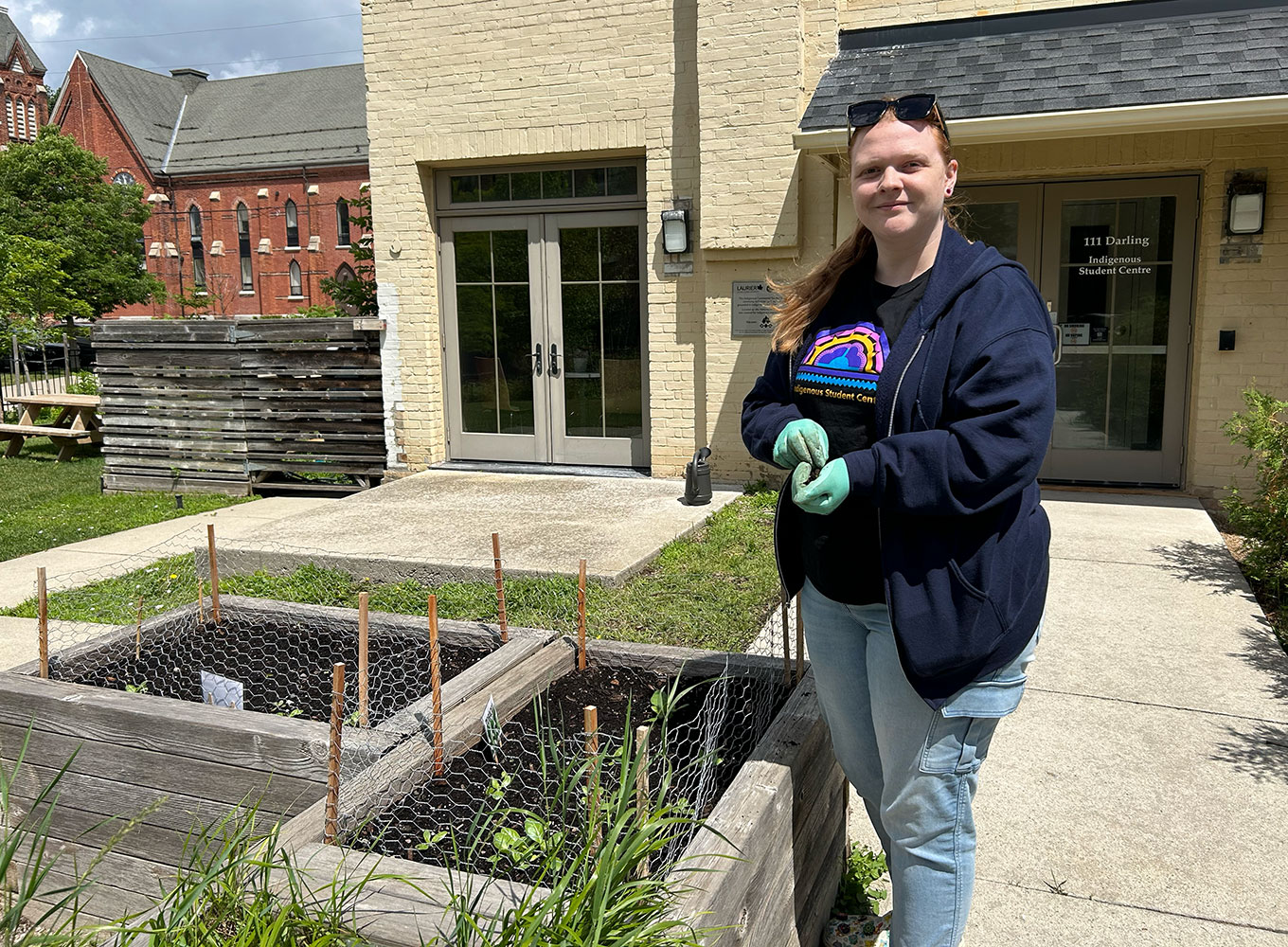
Laurier Brantford student Sam Lewis weeds a bed of seedling tobacco plants in the Onkwehonwè:ne medicine garden.
The community that Lewis has found at Onkwehonwè:ne inspired her to take on a leadership role herself. As co-president of Laurier Brantford’s Indigenous Student Association, she encourages fellow students to explore the centre’s programming, and to make full use of its varied roles, including that of a quiet space for study.
“I don’t think I’d be able to get the grades I’ve been getting if I was stuck studying at home or in a noisy hallway,” says Lewis. “This is where I go to get work done.”
As an ISC summer staff member, Lewis tends Onkwehonwè:ne’s medicine garden, grown in raised beds at the rear of the property. She weeds and waters plants that are grown from seed, later to be harvested and dried for ceremonial and medicinal purposes. Sage, for instance, will be used in smudging, while marigolds and geraniums can be incorporated into healing salves.
Lewis is also responsible for maintaining the property’s three “micro-forests”: clustered plantings of native trees and plants, including sugar maples, strawberries and blue violets.
“I used to help my grandma with her vegetable garden,” she says. “It’s nice getting back into it.”
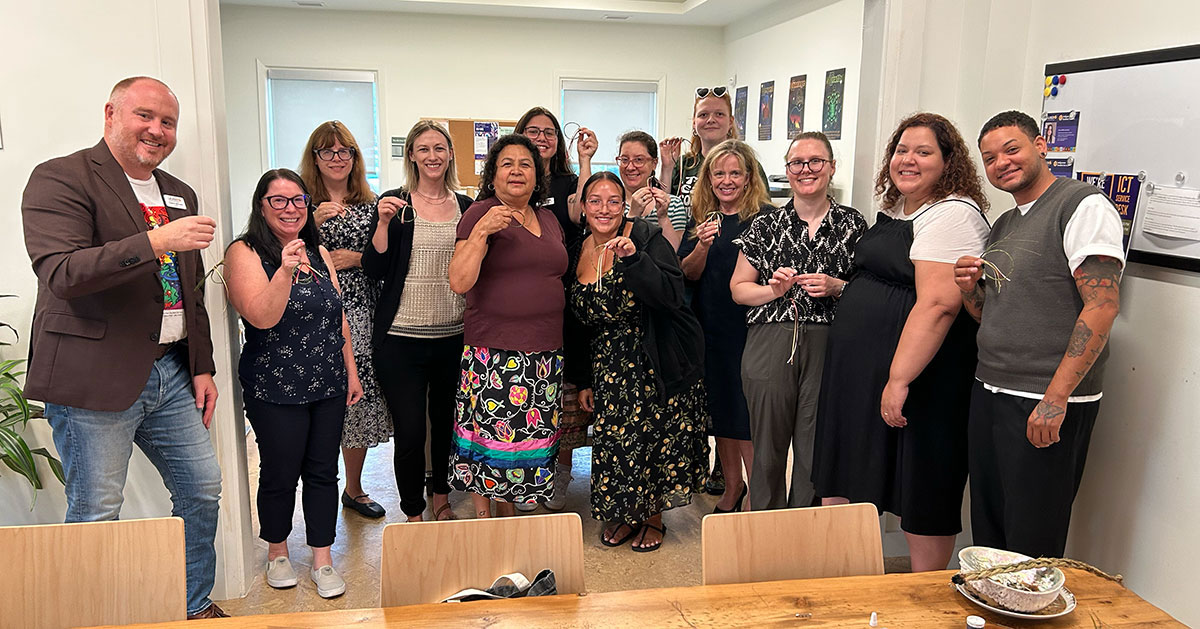
In August 2025, Laurier Brantford students, staff and faculty gathered at Onkwehonwè:ne to mark the annual sweetgrass harvest. This tall, natural wild grass grown in the medicine garden is used in smudging, healing and — as demonstrated in a workshop guided by Indigenous Student Services counsellor Margaret Neveau (fifth from left) — braided handicrafts.
“Sweetgrass represents the hair of Mother Earth,” says Neveau.
While Lewis looks ahead to her final year as an undergraduate student and the pursuit of a career in Indigenous restorative justice, students in a new cohort will soon embark on their Laurier journeys. This fall, the university will welcome its largest-ever incoming class of Indigenous students, with more than 130 confirmed to begin their studies in Brantford, Waterloo and Kitchener.
Thomas credits the record-breaking enrolment in large part to increased community awareness about the student supports delivered through Laurier’s ISCs, and the generosity of donors who have funded the centres over the years. In Brantford, the establishment, renovation and maintenance of Onkwehonwè:ne has benefitted from significant financial support from Eric and Valerie Grundy, the Wilfrid Laurier University Alumni Association, the Ruth Stedman Brantford Endowment and Laurier’s Sustainability Office.
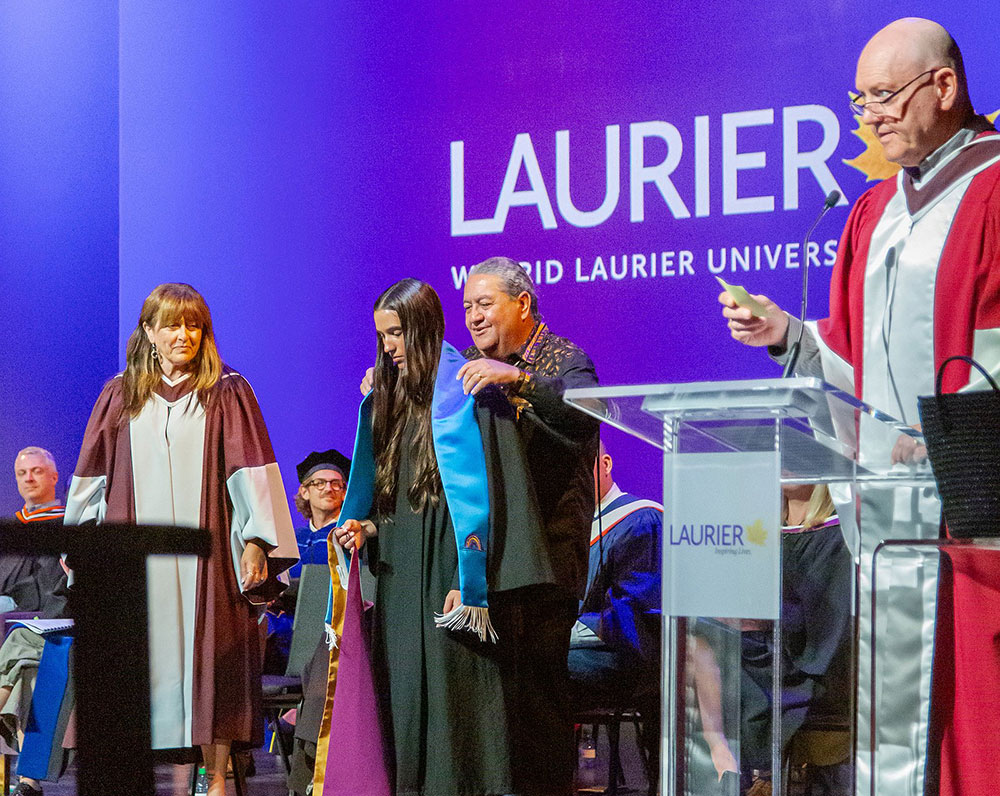
Laurier graduated a record number of Indigenous students — 126 — at fall and spring convocation ceremonies during the 2025-26 academic year.
“We’re sincerely grateful for the belief that our donors have shown in our Indigenous Student Centres,” says Thomas. “Their ongoing support helps us to serve Laurier’s Indigenous learners in the best capacity possible.”
Lewis knows firsthand the impact those donations have.
“In university, it’s easy to feel like you’re just a number — especially when you’re a new student coming fresh out of high school,” says Lewis. “Having a welcoming place like Onkwehonwè:ne, with all its supports and connections, makes it so much less intimidating.”
“And if you have doubts about the extent of your Indigeneity — maybe you feel too white-presenting, or whatever the case may be — show up anyway. You belong here.”

Laurier Brantford is more than a place of learning — it’s a hub where community and campus come together. From cultural events like MarketFest to student-led projects that strengthen local organizations, Laurier is making a real impact in Brantford every day. Sign up for the Campus Connections Brantford e-newsletter to stay on top of upcoming events and inspiring stories.