

We use cookies on this site to enhance your experience.
By selecting “Accept” and continuing to use this website, you consent to the use of cookies.
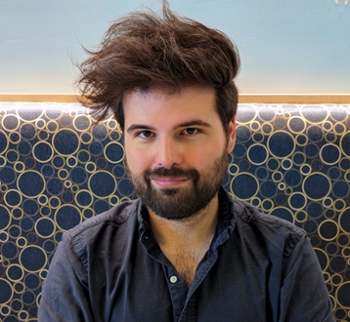
Dr. Nicolas Rouleau is a neuroscientist, bioengineer, and Assistant Professor of Health Sciences at Wilfrid Laurier University. He is also an Adjunct Professor of Biomedical Engineering at Tufts University and Affiliate Scientist at the Allen Discovery Center at Tufts. Dr. Rouleau was the last PhD student of the neuropsychologist Dr. Michael Persinger, whose work on the electromagnetic bases of consciousness inspired Rouleau to pursue his dissertation on the material-like properties of brain tissues, including their capacity to filter electromagnetic fields. In 2017, he trained as a Postdoctoral Researcher at Tufts under Dr. David Kaplan and Dr. Michael Levin, focusing on minimal cognitive responses in bioengineered brain models as well as 3D tissue models of Alzheimer's Disease and traumatic brain injury. In 2021, he wrote an award-winning essay on the topic of transmissive consciousness for the Bigelow Institute of Consciousness Studies, which garnered international attention. In 2023, Dr. Rouleau became a faculty member at Laurier where he is PI of the Self-Organizing Units Lab (SOUL), which is supported by Tri-Council awards to investigate the mechanisms of embodied cognition and synthetic biological intelligences in customizable, bioengineered neural tissues. He also co-directs the Center for Tissue Plasticity and Biophysics (TPAB) at Laurier. He is most interested in the fundamental and scale-invariant properties of cognitive systems as well as the pursuit of unifying principles that reconcile organic neural function with analogous phenomena in cells, machines, and non-neural organisms, including the ethical implications of minimal forms of agency and consciousness.
I am deeply interested in the minimal necessary elements that generate cognitive functions including memory, problem-solving, decision-making, and consciousness. To further understand unique brain states, I have developed neural tissue models of Alzheimer's Disease (AD), Parkinson's Disease (PD), and traumatic brain injury (TBI). I have also investigated material-like properties of brain tissues and how they interact with patterned electrical currents and electromagnetic fields. My current research focuses on embodied and minimal cognition in hybrid neural-robotic and assembloid systems as tools to assess the multiple realizability of cognitive functions and to model neural disease in vitro. Integrating behaviourism, neurobiology, tissue engineering, cybernetics, and computer science, my interdisciplinary approach is motivated by a desire to understand what a "brain" is from a functionalist perspective. Broader implications of my work include the design of bio-inspired artificial intelligences, neuromimetic materials, and the fabrication of high-throughput platforms for drug discovery and repurposing to mitigate and reverse neural disease.
NSERC Discovery Grant - "Identifying the neurostructural determinants of minimal cognition using embodied 3D bioengineered brain models" (2022-2027)
NFRF Exploration Grant - "Building modular circuits with bioengineered neural tissues to design brain- inspired artificial intelligences" (2024-2027)
CFI - JELF Grant - "High-density multi-well microelectrode arrays with closed-loop feedback for intelligent biocomputing" (2026-2031)
Faculty of Science Early Career Award for Teaching Excellence (2026)
Laurier Early Career Researcher Award (2026)
Laurier Early Career Research Grant (2025)
Bigelow Institute for Consciousness Studies (BICS) Essay Competition Winner (2022)
NSERC Postgraduate Scholarship, Doctoral (PGS-D) (2015)
NSERC Alexander Graham Bell Canada Graduate Scholarship (CGS-M) (2013)
Kansala, C., St. Jean, J., Nkansah-Okoree, V., Rouleau, N., Murugan, N.J. (Preprinted). LTP-patterned electromagnetic field stimulation induces NMDA receptor-dependent synaptic plasticity in mammalian cortical neuronal networks. bioRxiv Preprint: doi: 10.64898/2026.06.17.732958
St. Jean, J., Sellar, E., Kansala, C., Rouleau, N. (In review). The perils of half measures: Why consciousness engineering must be bold. Frontiers in Psychology.
Kansala, C., Cicek, E., Nkansah-Okoree, V., Golding, A., Murugan, N.J., Rouleau, N. (2026). Superstitious conditioning forms the experience of free will under causal determinism. Frontiers in Human Neuroscience. 20: 1832135.
Sellar, E.P., Rouleau, N. (2026). A cybernetic framework for synthetic biological intelligence in the era of neural tissue engineering. npj Unconventional Computing. 3(31): 1-8.
Roskies, A. & Rouleau, N. (2026). Research on brain organoids should prioritize questions of agency, not consciousness. AJOB Neuroscience. 17(2): 96-98.
Rouleau, N. & Levin, M. (2026). Brains and where else? Mapping theories of consciousness to unconventional embodiments. Philosophical Transactions: A. 384: 20250082
Sadri-Gerrior, M., Shivakumar, K., Rouleau, N. (2026). Cultural Considerations of Suicide Risk Assessment with Immigrant Populations in Canada. Transcultural Psychiatry. 63(1).
Casey, H., DiBerardino, I., Bonzanni, M., Rouleau, N., Murugan, N.J. (2025). Exploring ultraweak photon emissions as optical markers of brain activity. iScience. 28(3), 112019.
Rouleau, N., and Murugan, N. (2024). The risks and rewards of embodying AI with cloud- based laboratories. Advanced Intelligent System. 7(1), 2400193.
Martel, J., Rouleau, N., Murugan, N.J., Chin W.C., Ojcius, D.M., Young, J.D. (2024). Effects of light, electromagnetic fields and water on biological rhythms. Biomedical Journal. 100824.
Rouleau, N., and Levin, M. (2024) Discussions of machine versus living intelligence need more clarity. Nature Machine Intelligence. 6(12), 1424–1426.
Murugan, N.J., Cariba, S., Abeygunawardena, S., Rouleau, N., Payne, S.L. (2024). Biophysical control of plasticity and patterning in regeneration and cancer. Cellular and Molecular Life Sciences. 81(1), 1-9.
Rouleau, N., and Levin, M. (2023). The multiple realizability of sentience in living systems and beyond. eNeuro. 10(11), 1-7.
Rouleau, N., and Murugan, N.J. (2023). Self-similarity and spatial periodicity in cerebral cortical patterning: Structural design notes for neural tissue architects. Anatomia. 2(3), 222-231.
Lomoio, S., Pandey, R.S., Rouleau, N., Manicacci, B., Kim, W.H., Cantley, W.L., Haydon, PG., Bennett, D.A., Young-Pearse, T.L., Carter, G.W., Kaplan, D.L., and Tesco, G. (2023). 3D bioengineered neural tissue generated from patient-derived iPSCs mimics time- dependent phenotypes and transcriptional features of Alzheimer’s disease. Molecular Psychiatry. 28, 5390-5401.
Rouleau, N., Murugan, N., and Kaplan, D.L. (2023). Functional bioengineered models of the central nervous system. Nature Reviews Bioengineering. 1(2), 1-19.
Rouleau, N. & Cimino, N. (2022). A Transmissive Theory of Brain Function: Implications for Health, Disease, and Consciousness. NeuroSci. 3(3),440-456.
Rouleau, N., Cairns, D., Rusk, W., Levin, M., Kaplan, D.L. (2021). Learning and Synaptic Plasticity in 3D Bioengineered Neural Tissues. Neuroscience Letters. 750, 135799.
Rouleau, N., Murugan, N.J., and Kaplan, D.L. (2021). Toward Studying Cognition in a Dish. Trends in Cognitive Sciences. 25(4), 294-304.
Rouleau, N., Bonzanni, M., Erndt-Marino, J., Sievert, K., Ramirez, C.G., Rusk, W., Levin, M., Kaplan. D.L. (2020). A 3D Tissue Model of Traumatic Brain Injury with Excitotoxicity that is Inhibited by Chronic Exposure to Gabapentinoids. Biomolecules. 10(8), 1196.
Rouleau, N., Murugan, N.J., Rusk, W., Koester, C., Kaplan, D.L. (2020). Matrix Deformation with Ectopic Cells Induced by Rotational Motion in Bioengineered Neural Tissues. Annals of Biomedical Engineering. 48, 2192-2203.
Liaudanskaya, V., Chung, J.Y., Mizzoni, C., Rouleau, N., Berk, A.N., Wu, L., Turner, J.A., Georgiakoudi, I., Whalen, M.J., Nieland, T.J.F., and Kaplan, D.L. (2020). Modeling Controlled Cortical Impact Injury in 3D Brain‐Like Tissue Cultures. Advanced Healthcare Materials. 23(8), 1-14.
Cairns, D., Rouleau, N., Parker, R.N., Walsh, K.G., Gehrke, L., and Kaplan, D.L. (2020). A 3D Human Brain-Like Model of Herpes-Induced Alzheimer’s Disease. Science Advances. 6(19), eaay8828.
Rouleau, N., Cantley, W.L., Liaudanskaya, V., Berk, A., Du C., Rusk, W., Peirent, E., Koester, C., Nieland, T.J.F., & Kaplan, D.L. (2020). A Long-Living Bioengineered Neural Tissue Platform to Study Neurodegeneration. Macromolecular Biosciences 20(3).
Bonzanni, M., Rouleau, N., Levin, M., Kaplan, D.L. (2020). Optogenetically Induced Cellular Habituation in Non-Neuronal Cells. PLoS ONE. 15(1): e0227230
Contact Info:
Office location: BA538, Bricker Academic Building
Office hours: By Appointment.
Languages spoken: English, French