


We use cookies on this site to enhance your experience.
By selecting “Accept” and continuing to use this website, you consent to the use of cookies.
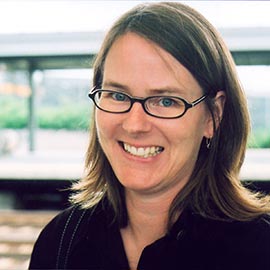
I did my graduate work in social psychology at York University, receiving my MA in 2000 and my PhD in 2005. Prior to that, I earned BAs in English and Psychology at McMaster University.
I joined Laurier in 2005 at the Brantford campus. Having grown up in Brantford, I am excited to be back in my hometown, and I especially enjoy being a part of the growing, interdisciplinary community at Laurier Brantford.
The main focus of my research is the causes, consequences and resolution of interpersonal conflict. Using a social cognitive framework, my research has examined the role of apology and other gestures of remorse in facilitating forgiveness. My major research projects have included: conflict in the context of the criminal justice system, looking at factors such as remorse in offenders on death row; the concept of closure as it relates to victims of crime; and how victims of crime are viewed (and influenced) by third parties (i.e., people not involved in the crime).
My secondary area of interest is positive psychology, looking at the many ways that evidence-based practices can help people thrive and flourish.
I have volunteer research opportunities for undergraduate and graduate students interested in apology, forgiveness and victims of crime. Contact me for more information.
I am willing to supervise graduate students in the areas of interpersonal conflict, apology, forgiveness and positive psychology.
BOOKS
Eaton, J. (forthcoming, 2027). Say it like you mean it. The science of apologies and how they might just save us. Doubleday Canada/Bloomsbury US.
Eaton, J. (2024). Apologies from death row. The meaning and consequences of offender remorse. Routledge.
Eaton, J., & Morris, D. N. (2019). Academic literacy in the social sciences. Canadian Scholars.
ACADEMIC ARTICLES AND BOOK CHAPTERS
Apology and Forgiveness
Eaton, J. (2022). Remorse on death row. In S. Tudor, R. Weisman, M. Proeve, & K. Rossmanith (Eds), Remorse and Criminal Justice: Multi-Disciplinary Perspectives (pp. 193–213). Routledge.
Eaton, J., Olenewa, J., & Norton, C. (2022). Judging “extreme” forgivers: How victims are perceived when they forgive the unforgivable. International Review of Victimology, 28(1), 33–51. https://doi.org/10.1177/02697580211028021
Eaton, J., & Christensen, T. (2014). Closure and its myths: Victims’ families, the death penalty, and the closure argument. The International Journal of Victimology, 20, 327–343. https://doi.org/10.1177/0269758014537148
Eaton, J. (2013). The effects of third-party validation and minimization on judgments of the transgressor and the third party. British Journal of Social Psychology, 52, 273–289. https://doi.org/10.1111/j.2044-8309.2011.02066.x
Eaton, J., & Sanders, C. (2012). A little help from our friends: Informal third parties and interpersonal conflict. Personal Relationships, 19, 623–643. https://doi.org/10.1111/j.1475-6811.2011.01381.x
Eaton, J., & Theuer, A. (2009). Apology and remorse in the last statements of death row prisoners. Justice Quarterly, 26, 327–347. https://doi.org/10.1080/07418820802245078
Eaton, J., Struthers, C. W., & Santelli, A. G. (2006). The mediating role of perceptual validation in the repentance–forgiveness process. Personality and Social Psychology Bulletin, 32, 1389–1401.
https://doi.org/10.1177/0146167206291005
Positive Psychology
Eaton, J., Sharma, A., & Law, D. (2025). “I may look fake but I’m real where it counts”: Authenticity and positivity in the songs of Dolly Parton. Psychology of Aesthetics, Creativity, and the Arts, 19(2), 205–217. https://doi.org/10.1037/aca0000527
Eaton, J., & Tieber, C. (2017). The effects of coloring on anxiety, mood, and perseverance. Art Therapy: Journal of the American Art Therapy Association, 34, 42–46. https://doi.org/10.1080/07421656.2016.1277113
Teaching
Burgoyne, S., & Eaton, J. (2018). The partially flipped classroom: The effects of flipping a module on “junk science” in a large methods course. Teaching of Psychology, 45(2), 154–157. https://doi.org/10.1177/0098628318762894
Eaton, J., Long, J., & Morris, D. (2018). Social science boot camp: Development and assessment of a foundational course on academic literacy in the social sciences. College Teaching, 66(1), 14–21. http://dx.doi.org/10.1080/87567555.2017.1348332
Eaton, J., & Uskul, A. K. (2004). Using The Simpsons to teach social psychology. Teaching of Psychology, 31, 277–278.
UU499, Thesis (Brantford students only) https://students.wlu.ca/programs/human-and-social-sciences/psychology/assets/resources/uu499-br-thesis-course.html
PS296, Statistics
PS389, Positive Psychology
Contact Info:
T: 548-889-4290
Office location: Research and Academic Centre East, RCE211
Office hours:
I am on sabbatical from July 1, 2026 to June 30, 2027.
Languages spoken: English
Psychology Today blog: https://www.psychologytoday.com/ca/contributors/judy-eaton-phd